



Description
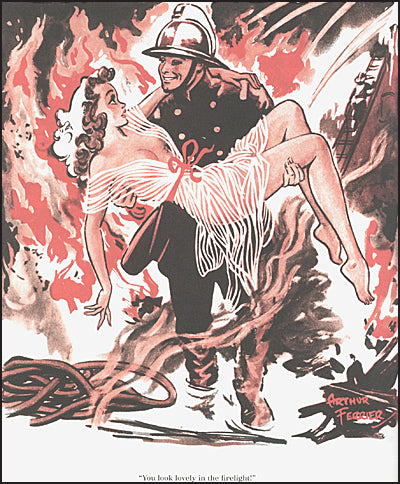
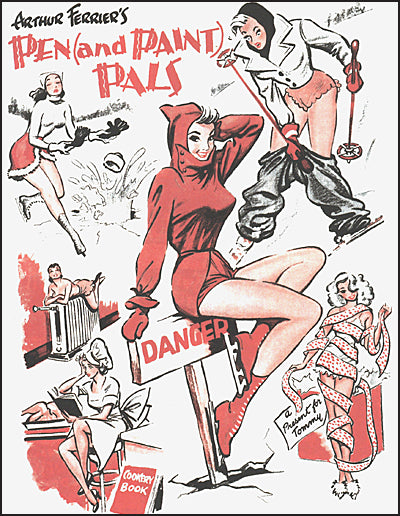
Featuring a cast of captivating and mischievous starlets, Burlesque Bombshells dives into Ferrier's post-war pin-up illustrations. This volume, filled with beautiful girls, witty one-liners, and mid-century fashions, celebrates a master of comic illustration who merits wider recognition. In addition to showcasing Ferrier's work, it includes his illustration advice in the following articles: "From Sketch to Ink," "Model Etiquette," and "Model Choice and Lighting." Take a front-row seat for Ferrier's irresistible cartoon pin-ups steal the spotlight. Arthur Ferrier had a very long career – he was active from the thirties to the sixties. He first sold cartoons to the Daily Record while working as an analytical chemist in Glasgow. He later moved to London, where he got work from Punch, London Opinion, The Humorist and other weekly magazines. He drew one or two beautiful cartoons for Blighty magazine, a newsprint weekly, pretty much from its inception during World War Two through to its demise – it eventually changed its name to Parade and metamorphosed into a top-shelf magazine, by which time his work looked somewhat out of place. In the golden age of British cartoon pin-up art, no illustrator was as prolific or popular as Scotsman Arthur Ferrier. As the "cheesecake king" of good girl art, his voluptuous, wasp-waisted, leggy women were the benchmark for pin-up illustration. Through cartoons, comic strips, magazine illustrations and advertising art, his work epitomized the British pin-up for four decades. Often found in a state of casual undress... As well as his Blighty contributions, book illustrations and advertising work, Ferrier also drew comic strips – Film Fannie, Eve, ITMA ("It's That Man Again", based on a BBC radio comedy show) and Our Dumb Blonde, which ran in the Sunday Pictorial for seven years from 1939 to 1946. Ferrier always preferred drawing directly from life, sketching a basic layout to resolve the composition and posing his models as required. He’d dress his studio with the specific chairs, dressers, tables and other furniture needed to achieve the right period effect. This is one of the reasons his work serves as such an interesting record of the fads and fashions of the times — something he sought to achieve, reasoning that if an illustrator would do their research for a story set in a specific historical period, they should do their best to reflect their own time with the same attention to detail.
Product Details
Cover: Hardcover
Page Count: 320
Dimensions: 8.0 (w) x 10.0 (h) x 0.0 (d)